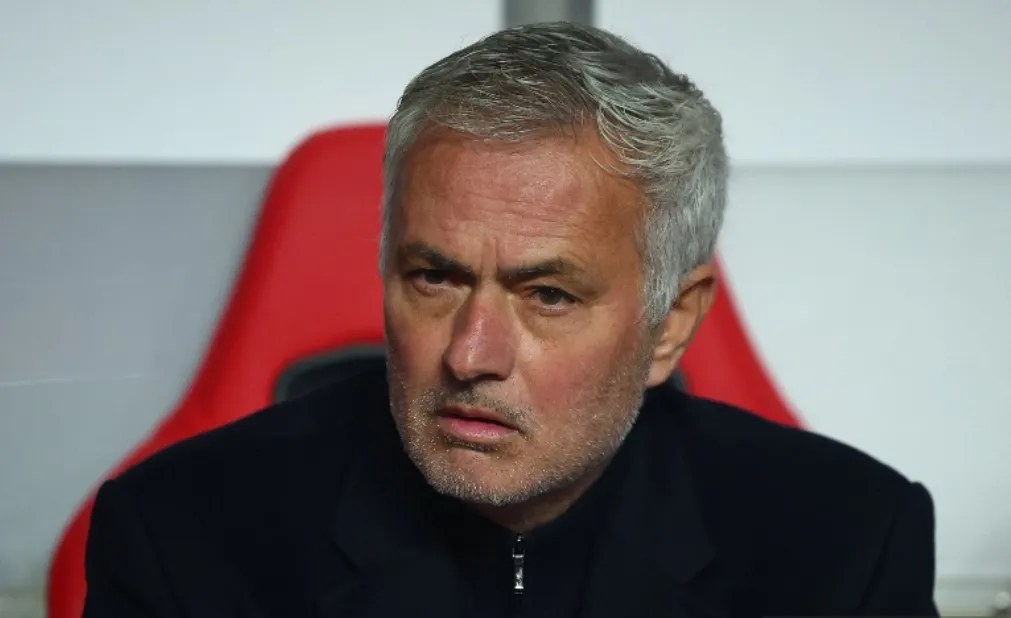
Have you ever considered that the Champions League knockout stages might turn into internal Premier League practice matches? This isn't a joke. The draw on February 27, 2026, suddenly made this seemingly absurd hypothesis a possibility. An unprecedented record was set: Premier League teams occupied six of the 16 spots in the Champions League Round of 16, nearly 40%. Even more absurdly, these six teams perfectly avoided each other in the draw, all drawing opponents from other leagues. What does this mean? It means that, theoretically, they could field their own quarter-finalists, or even sweep the semi-finals, as if playing practice matches in their own backyard. For the first time, Europe's premier club competition is smelling like the FA Cup.
It all began in the early hours of February 25, 2026. At St. James' Park, Newcastle United defeated Azerbaijan's Qarabag 3-2, winning 9-3 on aggregate and crushing their way into the Round of 16. With the Magpies' advancement, a long-forgotten chapter of history was rewritten. Prior to this, five Premier League teams—Arsenal, Liverpool, Tottenham, Chelsea, and Manchester City—had already secured their places in the top eight. Six teams participated, and all six advanced—this was unprecedented in the 34-year history of the Champions League. A single league monopolizing nearly 40% of the knockout stage spots—a scenario previously only seen in video game simulations.
Consider these six teams: Arsenal, Liverpool, Tottenham Hotspur, Chelsea, Manchester City, and Newcastle United. Behind them lies the insane transfer window of summer 2025. According to authoritative data, global football transfer spending surpassed €10 billion for the first time that summer, with the Premier League alone splashing out €3.56 billion—more than the combined total of the Bundesliga, La Liga, Serie A, and Ligue 1. Chelsea continued their rebuilding spree, Manchester City spent hundreds of millions on their future midfield linchpin, and even Newcastle, backed by Saudi capital, invested over €300 million in the summer transfer window for the first time. Money became the most direct catalyst for this Premier League storm.
With the Round of 16 finalists determined, all eyes were on the draw ceremony in Nyon, Switzerland, on the evening of February 27th. This draw employed entirely new rules, eliminating the rule of avoiding teams from the same country and instead matching teams based entirely on their league standings. Simply put, stronger teams were more likely to meet early. Everyone held their breath, waiting to see if an all-English Premier League clash would occur, especially between potential rivals Chelsea and Newcastle. However, as Croatian star Ivan Rakitic repeatedly pulled the ball from the glass bowl, a miracle occurred. All six Premier League teams were drawn separately.
Newcastle drew Barcelona, not Chelsea. This subtle result cleared the biggest theoretical obstacle to a six-team quarter-final clash. The final draw presented an almost bizarre polarization. The upper half of the bracket was a veritable "group of death": defending champions Paris Saint-Germain vs. Chelsea, Galatasaray vs. Liverpool, Real Madrid vs. Manchester City, and Atalanta vs. Bayern Munich. Look at these names; almost all the Champions League winners of the past decade are crammed into this section. Real Madrid and Manchester City have now met in the Champions League knockout stages for the fifth consecutive season; UEFA's draw machine seems to have caught a virus.
The second half of the draw presented a completely different picture. Aside from traditional powerhouse Barcelona, the remaining teams were Newcastle United, Atletico Madrid, Tottenham Hotspur, Bodø/Glimt, Sporting CP, and Bayer Leverkusen. Of these seven teams, only Barcelona had ever lifted the Champions League trophy. This severe imbalance in the strength of the draw caused an immediate uproar on social media after the results were announced. Comments like, "Did UEFA just guarantee Arsenal and Barcelona a spot in the final?" and "Is the upper half hell and the lower half a beginner's village?" flooded social media.
Without a doubt, Arsenal is the biggest winner of this draw. The Gunners won all eight of their league matches, scoring 23 goals and conceding only 4 – both figures being the best among the 36 participating teams. This dominance earned them the biggest advantage in the draw. Their opponent is Bayer Leverkusen from the Bundesliga, a team with considerable strength but certainly not top-tier. More importantly, in Arsenal's entire lower bracket, the only clearly visible formidable opponent on the road to the final is Barcelona. And Barcelona's form this season has been far from consistent.
Betting companies expressed their opinions in the most direct way. After the draw, Arsenal's odds of winning the title dropped further from 4.5 to 3.5, giving them a significant lead across Europe. Bayern Munich, in second place, had odds of 6.5, and Barcelona, in third, had odds of 7.5. This means that in the eyes of the bookmakers, Arsenal's probability of winning the title is far higher than any other team. This favor is not only due to the draw, but also based on their dominance throughout the season. In the Premier League, they also lead the standings by 5 points.
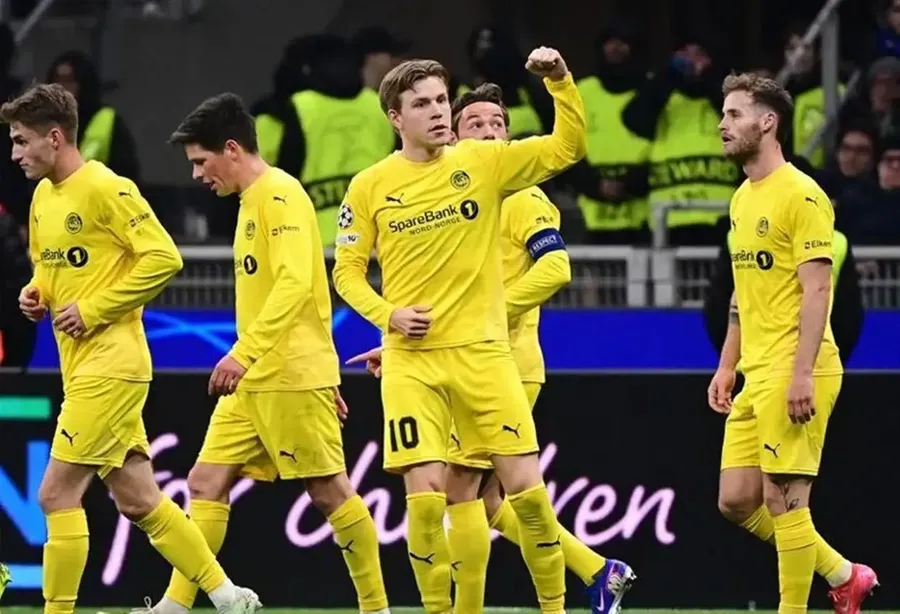
Of course, the allure of football lies in its unpredictability. While the upper bracket is fiercely contested, it features clashes between some of the most bankable stars in the sport. Mbappe leads Paris Saint-Germain against a resurgent Chelsea, and Haaland and Bellingham could face off again in a Real Madrid vs. Manchester City showdown. The winner of either matchup will be a formidable opponent, tempered by fire. The lower bracket is no less dramatic, with Norwegian underdog Bodø/Glimt's miraculous run continuing. This team, valued at only €57 million, has eliminated Inter Milan and Juventus, and will face Sporting Lisbon to continue their Nordic fairytale.
This spring is likely to be a difficult one for Serie A fans. Of the four participating teams, Napoli was eliminated in the league stage, while Inter Milan and Juventus were both knocked out in the playoffs by Bodø/Glimt and Galatasaray, respectively. Only Atalanta remains as a lone hope, having come back from a 0-2 deficit against Borussia Dortmund in the first leg to stage a stunning 4-1 comeback victory at home in the second leg, keeping a glimmer of hope alive for the Italian peninsula. However, their opponent in the round of 16 is Bayern Munich, a path that seems fraught with uncertainty.
As the financial behemoths of the Premier League relentlessly crush European football, and as luck seems to be on their side in the draw, an age-old question resurfaces: Is football, the essence of this sport, competition or capital? Do we admire the tactical battles, the flashes of brilliance by players, or the dizzying numbers on club balance sheets? This season's Champions League, like a mirror, reflects all the contradictions and triumphs of modern football. Can Arsenal translate their paper advantage into their first-ever Champions League trophy? Who will ultimately benefit from the fierce infighting in the upper half of the bracket? These questions will all be answered in the next two months.
But perhaps more intriguing than the question of who will win the championship is this scenario: what if one day, both sides of the Champions League final are Premier League teams? Should we cheer for the Premier League's strength, or lament the demise of diversity in European football? When the Champions League becomes so close to the FA Cup, what we lose is not just suspense, but the original beauty of the diverse world of football. There is no standard answer to this question, but it will haunt every 90 minutes of the following match like a ghost.